
For decades, Nigeria’s oil industry has been plagued by mismanagement, underinvestment, weak agreements with international oil companies, and rampant theft. Despite vast reserves of crude, the sector has failed to deliver sustainable prosperity. Now, the country is turning its gaze toward renewable energy as a pathway to diversify its energy mix, strengthen security, and drive long-term growth.
⚠️ Oil theft remains one of the industry’s most pressing challenges. A government committee recently reported widespread bunkering operations, illegal export networks, and regulatory compromises. Satellite tracking revealed at least 589 oil leaks in 2024, most linked to theft and sabotage. Over 12 years, Nigeria lost nearly 620 million barrels of crude—worth $46.2 billion—alongside $1.84 billion in refined products.
🌱 Against this backdrop, many Nigerians are calling for a pivot away from fossil fuels. The government, while still backing oil, has set ambitious climate goals: net-zero carbon emissions by 2060. Central to this vision is the Energy Transition Plan (ETP), which underpins the Climate Change Act of 2021. The ETP focuses on six pillars: energy access, poverty reduction, modern energy systems, job preservation, sustainable transition, and legislation. Updated in 2024, the plan aims to cut emissions across power, transport, oil and gas, cooking, and industry.
👷 Job creation is a cornerstone of the transition. The government projects 340,000 new jobs by 2030 and up to 840,000 by 2060. Natural gas is seen as a “bridge fuel,” helping Nigeria move away from dirtier hydrocarbons while building capacity in renewables.
💡 Momentum is building. At the Nigeria Renewable Energy Innovation Forum 2025, contracts worth $435 million were signed to expand renewable capacity, expected to create 1,500 direct jobs. Vice President Kashim Shettima emphasized the need for $23 billion in short-term funding to provide reliable power to millions still living without electricity.
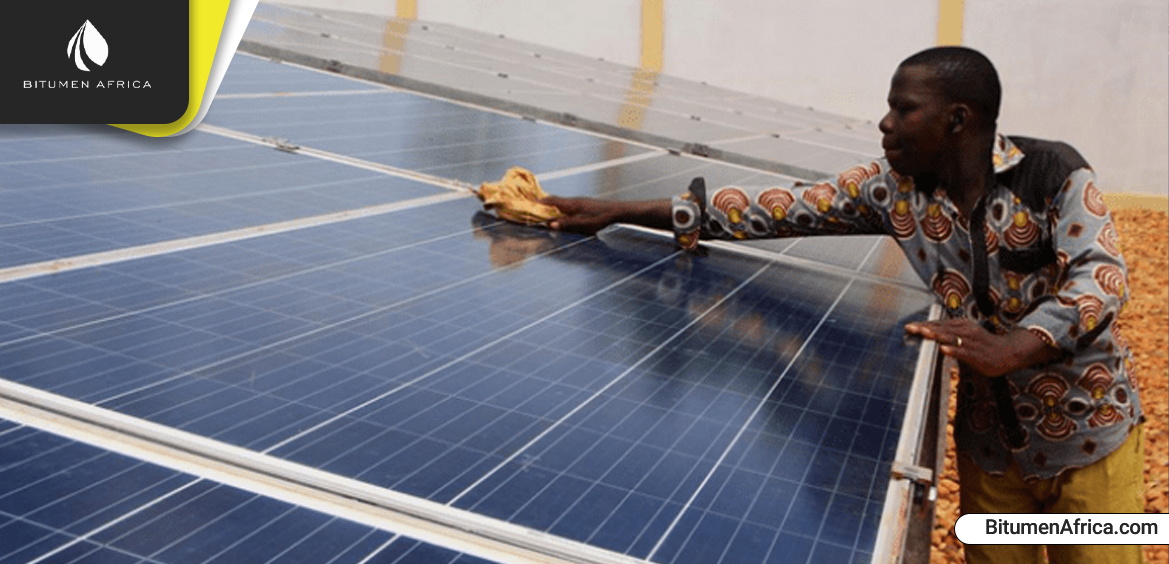
☀️ Solar power is emerging as Nigeria’s flagship renewable. In October, the Energy Commission partnered with Chinese solar giant LONGi to develop a 1 GW solar panel plant. This followed similar deals:
- September: REA partnered with Solarge BV (Netherlands) and Infrastructure Corporation of Nigeria for another 1 GW plant.
- March: REA signed with Oando Clean Energy to build a 1.2 GW solar assembly plant.
The government is even considering banning solar panel imports to encourage local manufacturing, leveraging Nigeria’s abundant lithium reserves. Technology Minister Uche Nnaji noted, “We are adding value to our raw materials.”
⚡ As Nigeria’s oil industry continues to struggle, the renewable sector is gaining traction. By expanding solar manufacturing, incentivizing local production, and fostering public-private partnerships, Nigeria is laying the groundwork for a cleaner, more resilient energy future.