
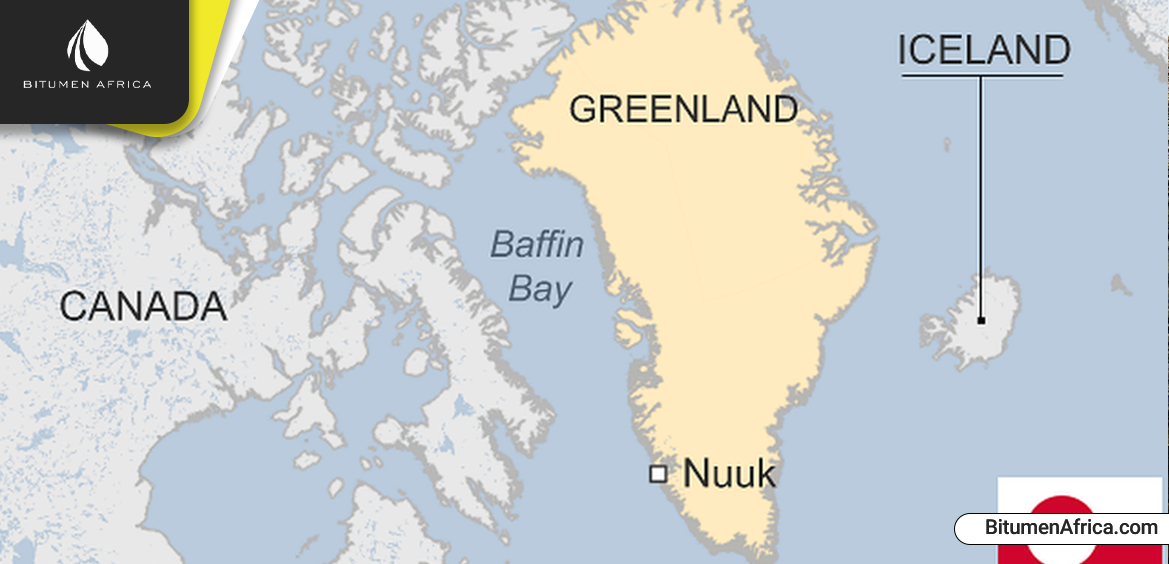
Greenland is back in the geopolitical spotlight. A year after U.S. President Donald Trump floated the idea of buying the island from Denmark, renewed American interest has revived a familiar question: Is Greenland really worth the fuss?
On paper, the Arctic territory looks like a treasure chest. It’s enormous—about one‑fourth the size of the continental United States—and is believed to hold vast oil and gas deposits, along with critical minerals and rare earth elements. For a world hungry for energy security and strategic minerals, that sounds irresistible.
But the reality is far more complicated.
🧊 The Harsh Truth Behind Greenland’s “Treasure”
Greenland’s resource potential exists mostly in theory. In practice, the island is one of the most challenging places on Earth to explore, extract, or process anything.
Analysts point to several barriers:
- No energy infrastructure
- No processing facilities
- Extreme climate and geography
- High operational costs
Even if the resources are there, turning them into commercial assets is another story entirely.
🛢️ What the USGS Says About Greenland’s Oil
The U.S. Geological Survey has offered some eye‑catching estimates over the years:
- East Greenland Rift Basins Province
- 31.4 billion barrels of oil equivalent (oil, gas, and NGLs)
- Most potential concentrated in the North and South Danmarkshavn Basins
- West Greenland–East Canada Province (2023 estimate)
- 7.8 billion barrels of oil
- 91.9 trillion cubic feet of gas
These numbers sound impressive—until you look at the track record.
🛢️ 50 Years of Exploration, Zero Discoveries
Since the 1970s, major oil companies like ExxonMobil, Shell, and Eni have drilled in Greenland’s offshore basins. After decades of sporadic efforts, not a single major discovery has been made.
By 2021, Greenland’s government decided enough was enough. Citing environmental concerns and poor economic prospects, it officially abandoned the pursuit of oil.
🌍 Greenland Is Not “Venezuela 2.0”
Despite the hype, Greenland is nowhere near becoming a petroleum powerhouse. As Wood Mackenzie analysts put it:
“Greenland is not Venezuela 2.0.”
The reasons are straightforward:
- Remote and inhospitable
- Underexplored and extremely costly
- Short summers and thick ice
- Specialized equipment required
- Fewer than 100 miles of paved roads across a massive landmass
Greenland has seen only 25 exploration wells drilled in its entire history—mostly in the Southwest basin—and every one of them has been unsuccessful.
🔍 What’s Still Happening Today?
Although new exploration is banned, Greenland has allowed extensions for three existing licenses in the Jameson Land Basin. London‑listed 80 Mile holds these licenses and recently secured funding from U.S. investment firm March GL to drill up to two wells.
These wells won’t transform Greenland into an oil hub, but they may help clarify whether the Jameson project holds any meaningful hydrocarbon potential.
❄️ So, Is Greenland Worth It?
From a purely geological perspective, Greenland might hold significant untapped resources. But geology alone doesn’t make a project viable.
The island’s:
- brutal climate
- lack of infrastructure
- high costs
- environmental sensitivities
- and decades of failed exploration
…all point to the same conclusion: Greenland is a long‑shot bet, not a strategic shortcut to energy dominance.
For now, the Arctic giant remains more of a geopolitical curiosity than a realistic resource prize.