
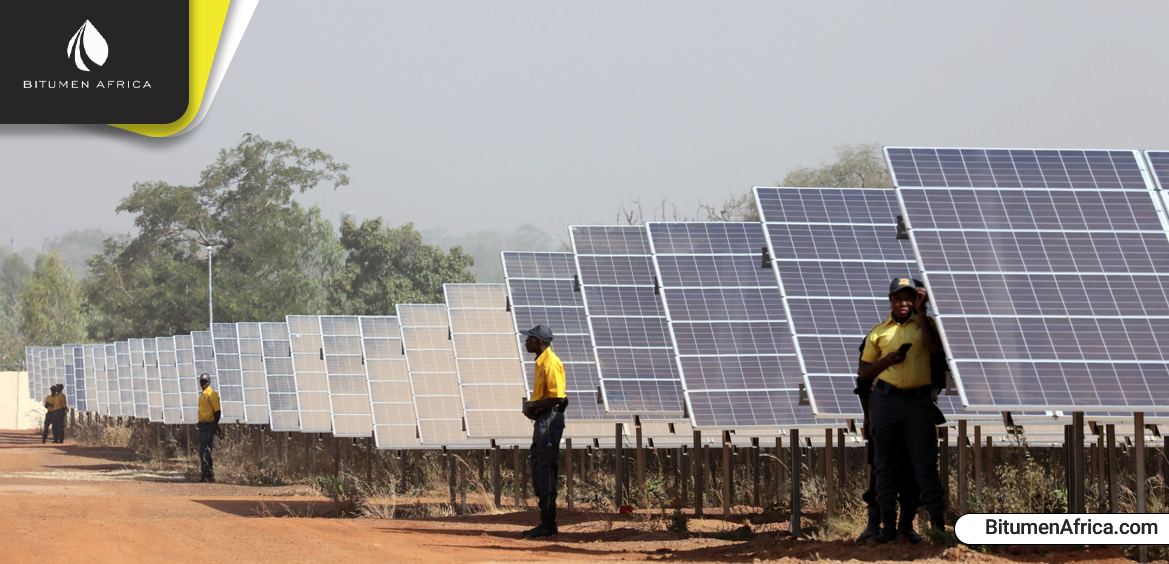
Africa’s solar revolution just received a major boost. This week, the World Bank and the Rockefeller Foundation announced tens of millions of dollars in new funding aimed at accelerating solar power deployment across the continent. Their investment will flow through non‑profit organizations working to expand solar‑powered technologies—particularly those that strengthen agriculture, one of Africa’s most vital and vulnerable sectors.
🌍 Solar Power Meets Food Security
According to Business Insider, the initiative will support the rollout of solar‑powered cold storage, refrigerators, water pumps, and grain mills in:
- Kenya
- Nigeria
- Ethiopia
- Sierra Leone
- Uganda
- Democratic Republic of Congo
This comes at a critical moment. Africa’s population is soaring, and with it, demand for both energy and food. Solar‑powered agricultural tools can dramatically reduce post‑harvest losses, improve irrigation, and stabilize rural livelihoods.
☀️ A Continent Rich in Sunlight—But Underpowered
Africa holds 60% of the world’s best solar resources, yet solar accounts for only 2% of its electricity generation. That gap is finally beginning to close.
A recent Semafor report notes that falling hardware prices and rising efficiency have triggered a boom in microsolar projects across the continent. The surge has been fueled in part by a wave of low‑cost Chinese solar panels, with imports nearly tripling in the last two years.
This affordability is enabling Africa to leapfrog fossil fuels, much like it leapfrogged landline telephony straight into mobile networks.
🌡️ Climate Justice and the Global Financing Gap
The global transition to low‑carbon energy is expensive and complex. Wealthy nations have long pledged to help developing countries decarbonize, but many of those promises have gone unfulfilled.
Meanwhile, the world’s poorest nations—those least responsible for climate change—are already experiencing its harshest impacts.
Leaders from small island states have been vocal about this injustice:
- Marshall Islands President Hilda Heine told the UN that promises alone “don’t reclaim land in atoll nations like mine.”
- Fiji’s Prime Minister Sitiveni Rabuka added, “Those who shoulder the blame must foot the bill.”
Africa sits in a uniquely complicated position. It urgently needs climate finance to unlock its renewable potential, yet it is wary of repeating a familiar pattern: resources extracted, value exported, and local communities left behind.
🏭 Building Solar Capacity in Africa, Not Just for Africa
While Chinese panels have helped ignite Africa’s solar boom, long‑term success depends on building local supply chains and local manufacturing capacity.
A 2025 Clean Technica report highlights a growing consensus among African climate leaders:
The continent, which holds more than 30% of the world’s critical minerals, should be an industrial actor—not merely an importer—in the clean energy transition.
This shift would allow African nations to capture more economic value, create jobs, and reduce dependence on foreign suppliers.
🔮 A Pivotal Moment for Africa’s Energy Future
The new funding from the World Bank and the Rockefeller Foundation is more than a financial injection—it’s a signal. It suggests that global institutions are beginning to recognize Africa not just as a recipient of aid, but as a central player in the world’s clean‑energy future.
Whether this moment becomes a true turning point will depend on:
- Sustained climate financing
- Stronger local manufacturing ecosystems
- Policies that ensure Africans benefit from their own resources
- Continued innovation in microsolar and off‑grid technologies
Africa has the sunlight, the land, the minerals, and the momentum. What it needs now is the global follow‑through—and the local empowerment—to turn potential into power.