
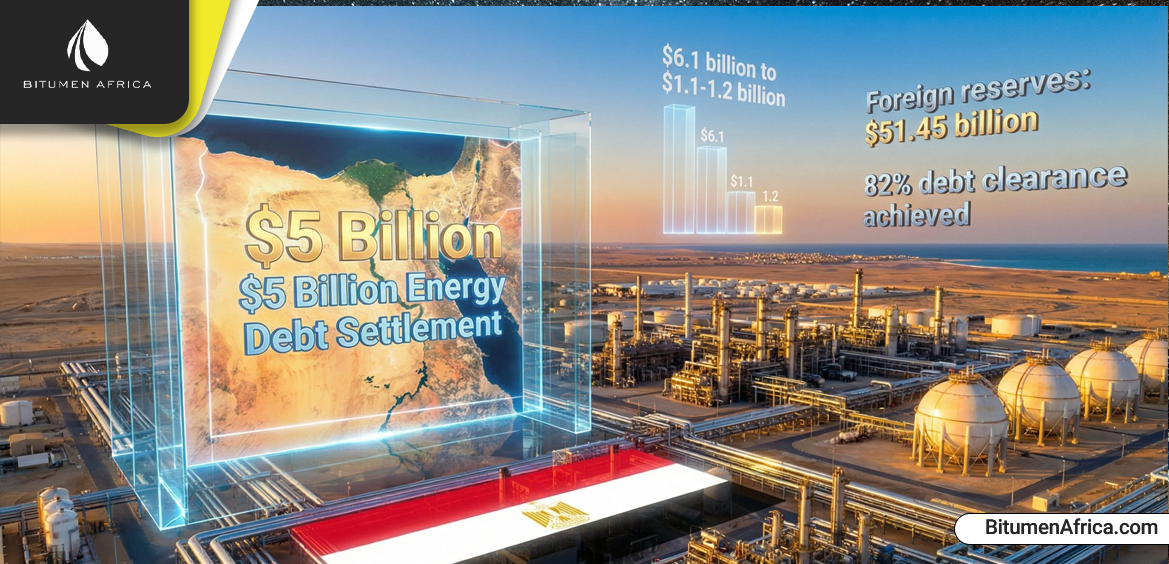
After years of turbulence, Egypt’s oil and gas sector has stepped into 2026 with something it hasn’t seen in a long time: a genuine piece of positive economic news. Prime Minister Mostafa Madbouly announced that Cairo has finally made a significant dent in the massive debts owed to international oil companies (IOCs)—a burden that has weighed heavily on investment, production, and the country’s broader economic stability.
It’s a welcome development. But it doesn’t erase the deeper structural challenges Egypt continues to face.
💰 A Long‑Overdue Breakthrough on IOC Debt
For years, Egypt has struggled with:
- Severe foreign‑currency shortages
- Mounting overdue payments to energy partners
- Declining domestic gas production
- Rising import bills for LNG and Israeli pipeline gas
By mid‑2024, arrears to IOCs had ballooned to $6.1 billion, largely because the Central Bank lacked the dollars needed to honor contractual obligations. The consequences were immediate and painful: investor confidence eroded, exploration slowed, and gas output fell sharply.
Now, Cairo has finally taken decisive action.
Madbouly confirmed that around $5 billion of those arrears have been paid down in recent days, reducing the outstanding balance to roughly $1.1–$1.2 billion. Even more importantly, the government has pledged to pay monthly invoices on time, preventing the cycle of unpaid claims from starting all over again.
⚡ Why This Matters for Egypt’s Energy Future
Clearing arrears is more than an accounting exercise. It’s a strategic reset.
Paying down debt:
- Rebuilds trust with international partners
- Encourages new investment in exploration and production
- Helps stabilize domestic gas supply
- Reduces reliance on costly LNG imports
- Supports Egypt’s ambitions to remain a regional energy hub
For a sector battered by volatility, this is a meaningful step toward restoring credibility.
🌍 But Structural Fragility Still Defines the Landscape
Despite the progress, Egypt’s broader energy narrative remains complicated.
The country still faces:
- Persistent foreign‑exchange constraints
- Sluggish economic growth
- Rising domestic energy demand
- Heightened geopolitical exposure in a volatile region
These pressures limit how quickly Egypt can rebuild its production base or expand its regional role. Even with arrears shrinking, the underlying vulnerabilities haven’t disappeared.
🔮 A Turning Point — If Cairo Can Maintain Momentum
Egypt’s decision to confront its IOC debt head‑on marks a rare moment of clarity and discipline in a sector long defined by crisis management. But sustaining this progress will require:
- Consistent payment of new invoices
- Policy stability
- Improved investment conditions
- A credible plan to boost domestic gas output
The coming year will reveal whether this is the beginning of a genuine turnaround—or simply a temporary reprieve.